To Be Findable, or Not To Be: A Digital Strategy for the Brave New World

All the web’s a stage, and all the brands merely players; they have their exits and their entrances, but only those with a masterly digital strategy avoid being “shuffled off the mortal coil” of the first page of results. To thrive in this “brave new world,” businesses must harmonize Website Design, User Experience (UX), SEO, and Blog Posts into a single, cohesive and expertly acted performance (Xinghai, 2023).
Website Design: The Wooden O
Your website is a virtual stage over which you have full control. To ensure your audience does not “exit, pursued by a bear,” stick to established web conventions, particularly in navigation conventions that audiences have come to expect (Xinghai, 2023). For instance, place your logo in the top-left corner and link it to the home page; and locate the search box in the top-right or sidebar, and make sure it is set up to keep the audience on your site.

Users judge your site by its appearance and professionalism. A professional look, easy-to-locate contact information, and fresh content are essential cues that tell visitors you are who you say you are. Furthermore, with over 90% of the global internet population using mobile devices, what once was a luxury is now become a virtue of necessity. Responsive design—allowing your site to adapt gracefully to any screen size—is now a primary factor in search ranking algorithms.
User Experience (UX): Suit the action to the word, the word to the action.
The traditional dichotomy between SEO and UX is becoming obsolete (Xinghai, 2023). A truly successful website must be both findable (SEO) and usable (UX). UX covers the physical, sensory, and mental experiences a person has when interacting with your digital tools.
Best practice dictates using SEO-informed UX design. By analyzing search data, you can understand exactly what information users are seeking and create an intuitive interface that aligns with their expectations. If your site is a “comedy of errors” with slow load speeds or confusing navigation, search engines will demote you based on high bounce rates and low dwell times. Remember, “brevity is the soul of wit”; simplicity, plenty of white space, and fewer choices lead to faster, more confident user decisions.

Blog Posts: Soliloquys for an Audience of One
When writing blog posts, you are writing for an “audience of one”. Instead of addressing a vaguely defined crowd, use personas—profiles that embody your target audience’s motivations—to create a one-on-one conversation.
Online readers are often “attention-starved” and scan rather than read every word. Therefore, use the inverted pyramid structure, placing the most important information or “news lead” at the top. To make your script scannable, use meaningful headings, bulleted lists, and bold key phrases. Most importantly, emphasize benefits over features. Do not merely list the technical traits of your craft, but reveal how it provides a positive outcome, such as transforming a common wooden stage into “the vast and glorious kingdom of a King’s coronation.”
SEO & LLMs: The Plot Thickens
Traditional SEO—focusing on title tags, H1 headers, and keyword-rich URLs—remains a vital foundation for search engines. However, we have entered an era where Generative AI is the “new consumer” (Dubois et al., 2025). Marketers must now look beyond “Share of Search” and optimize for “Share of Model” (SOM)—the frequency and favorability with which Large Language Models (LLMs) like ChatGPT and Gemini surface your brand.
Unlike traditional search engines, LLMs do not optimize for attention; they optimize for resolution (Dubois et al., 2025). To be the “chosen one” in an AI dialogue, your content must “narrowcast” toward specific pain points and provide structured, expert-backed information. For example, instead of merely vowing you forge “fine rapiers,” explain how your “tempered steel blade with a weighted cross-guard grants the duelist swifter parries in a heated fray”. Leading semantic niches with precise, problem-solving advice will ensure your brand is an essential participant in the algorithmic conversations of the future.

All’s Well That Ends Well
By carefully cultivating synergy between SEO and UX while leveraging forward-looking AI-friendly content strategies, your digital presence can be “made of sterner stuff” than your competitors. Focus on the user, provide structured value, and remember: “to thine own brand be true,” and success shall follow.
References
Dubois, D., Dawson, J., & Jaiswal, A. (2025). Forget What You Know About Search. Optimize Your Brand for LLMs. Harvard Business Review Digital Articles, 1–15. https://hbr.org/2025/06/forget-what-you-know-about-seo-heres-how-to-optimize-your-brand-for-llms
Shakespeare, W. (2020). The Arden Shakespeare complete works (3rd ed.; A. Thompson, D. S. Kastan, & H. R. Woudhuysen, Eds.). Bloomsbury Arden Shakespeare.
Xinghai, W. (2023). Conceptualizing Synergies Between SEO Practices and UX Design for Enhanced Website Usability and Engagement. Journal of Digitainability Realism & Mastery (DREAM) 2(05):18-22. DOI:10.56982/dream.v2i05.105
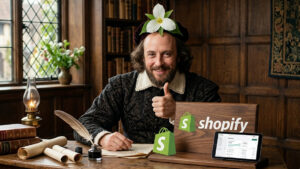




Hello! This is so creative. I did not even think about keeping the theme with this new topic. This was such a good idea. I also enjoyed the images you created to fit in with what you wrote about. You did a great job tying in your theme with the topic of best practices. I think the images could be smaller and placed more strategically, like on the side of the words. I do feel the images break up the text well, but maybe little images could be placed within the text. Other than that, I found this very fun to read and creative. Great job!